First Fish Chronicles: My Testimony to the United States Senate
My warning to the senators about the 4 crises resulting from technology use that is altering childhood and the urgent need to do something...now.
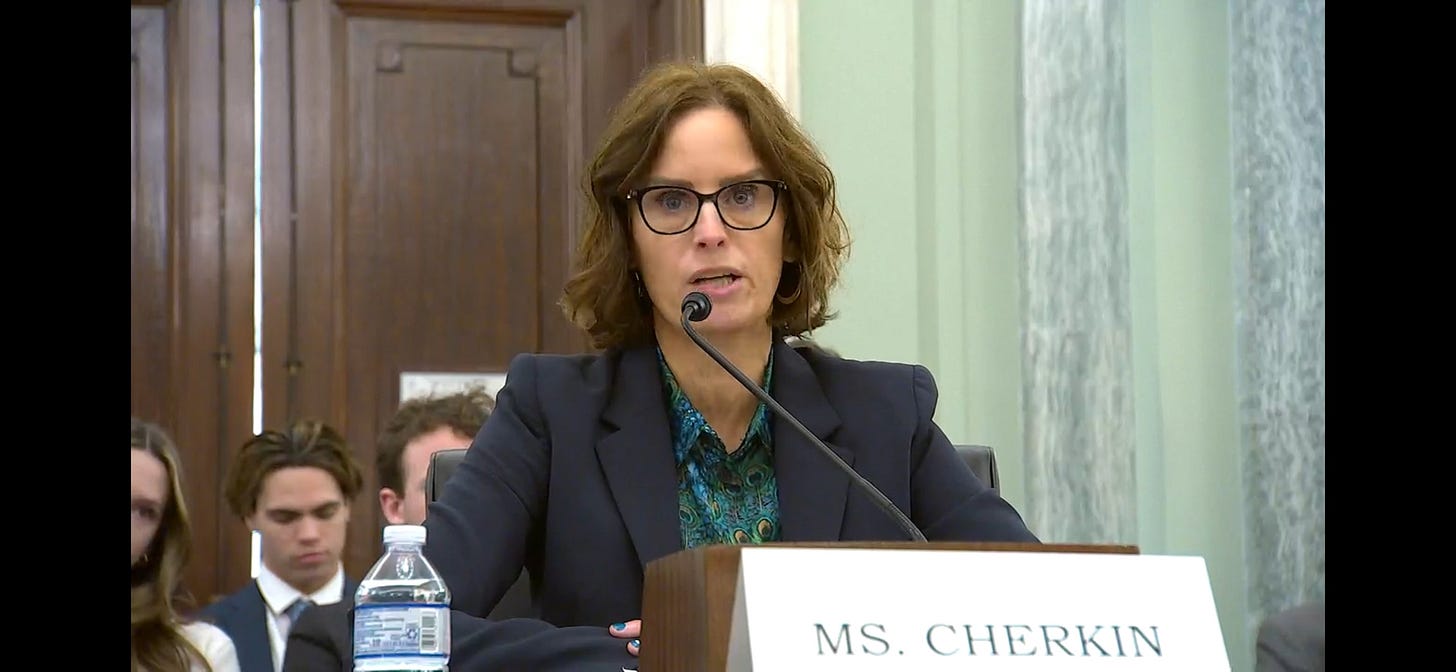
Testifying before the U.S. Senate, January 15, 2026
Today was an exhilarating day. Though I felt a lot of anticipatory nerves as I prepared to the hearing, once I sat in that chair, I was not at all nervous.
Not one bit.
It’s easy to tell the truth.
e
Here is a link to the video recording of my statement.
Here is a link to the full hearing.
My full statement:
Chairman Cruz, Ranking Member Cantwell, and Senators–
Thank you for the invitation to testify today.
My name is Emily Cherkin. I am a parent, author, speaker, and on faculty at the University of Washington. I do not accept funding from tech companies for my work.
I am here with a warning: technology is fundamentally changing childhood, and in the process, undermining parents and threatening the very health of our democracy.
Let me paint you a picture. Today, in America:
-
Children 8- to 18-years-old average 7.5 hours a day on screens– outside of school hours.
-
Nearly 90% of American public schools provide children with internet-connected devices for “learning.”
-
Occupational therapists teach young children how to turn the pages of a book.
-
Preschool teachers report that toddlers don’t like getting their hands dirty.
-
I know one teen who is so addicted to his phone he seals it in a Ziploc bag and brings it into the shower with him.
-
26% of 13- to 17-year-olds use ChatGPT to do their schoolwork– which they access on the laptops the school gives them.
-
My own university students have never received handwritten feedback on their papers.
-
Elementary school children are literally falling out of their chairs in classrooms because they lack the core strength to sit for long periods of time.
-
One child viewed more than 13,000 YouTube videos in less than three months– at school on his school-issued laptop.
-
The juxtaposition of childhood innocence and technology’s overreach can be seen in this anecdote: Middle schoolers, still losing their baby teeth, think it’s funny to imitate the sex noises they hear from watching online content. t
But doesn’t technology make our lives easier and prepare our children for the future?
Unfortunately, no, in spite of the rosy claims made by technology companies. As a result, the wholesale re-structuring of childhood around screens is catastrophic for children and families and has led us to four crises:
Crisis #1: Youth mental health
First, a mental health crisis. Screen use before two years of age is linked to accelerated anxiety by age 13. Today, one in three teen girls has seriously contemplated suicide.
The youth mental health crisis is so dire it elicited a warning from the surgeon general.
Crisis #2: Learning
Second, we face a learning crisis. As schools double down on EdTech products, reading and math scores are plummeting. One study found that investing in air conditioning yields a 30% increase in learning outcomes over investing in tech. We are quite literally wasting education dollars on ineffective technologies.
Crisis #3: Creativity
Third, a crisis in creativity. A 15-year-old in Kentucky told me older kids feel like the lucky ones. In an afterschool elementary school drama class she teaches, she said to the younger children: “Let’s pretend we’re flying!”
They looked at her and asked, ‘How?’“
If children can’t pretend to fly, they cannot imagine, and therefore, cannot innovate. Technology access in childhood does not enhance creativity; it kills it. This threatens the future of entrepreneurship in America. Remember, today’s tech giants had analog, play-based childhoods.
If children can’t pretend to fly, they cannot imagine, and therefore, cannot innovate. Technology access in childhood does not enhance creativity; it kills it. This threatens the future of entrepreneurship in America. Remember, today’s tech giants had analog, play-based childhoods.
-Emily Cherkin, to the United States Senate Committee on Commerce, Science, and Transportation, January 15, 2026
Crisis #4: Democracy
Finally, the enmeshment of technology in childhood is creating a crisis for our democracy. Thomas Jefferson said, “An informed citizenry is at the heart of a dynamic democracy.” When children spend hours being fed algorithmically-driven rage-bait content designed to increase engagement, they lose the ability to form their own opinions, detect bias, and think critically.
All of this is by design, of course. Technology companies build their products to hook and hold our attention, and children’s brains are especially vulnerable. To make their products safer, tech companies would have to compromise profits. And they don’t want to.
As a result, the business model of Big Tech and EdTech is fundamentally at odds with child development and its intrusion into family life undermines the choices parents can make.
This is not a kid problem. It is an adult problem that is impacting children. But parents especially need your help.
-
Parents may delay access to smartphones and social media, only for their children to view TikTok videos on a friend’s phone.
-
Parents block YouTube at home, but the school laptops give children direct access.
Senators, I invite you to think about your own childhoods: the teachers who inspired you, the awkward social moments, triumphing over a difficult high school essay, making– or not making– the basketball team.
We remember these moments because in the discomfort, we learned something. When we seek benefits from the convenience of technology, we forget the benefits of struggle.
We have reached a moment that demands we slow down and build things, even when the tech industry insists on the opposite. Legislation like the Kids Off Social Media Act is a start– and I believe we can go further. Just as we have done with regulating alcohol and tobacco access, we can do so with social media too.
Parents are not naive. We know that our children will use technology for work and life in adulthood.
We just want to ensure they have a childhood first.
############
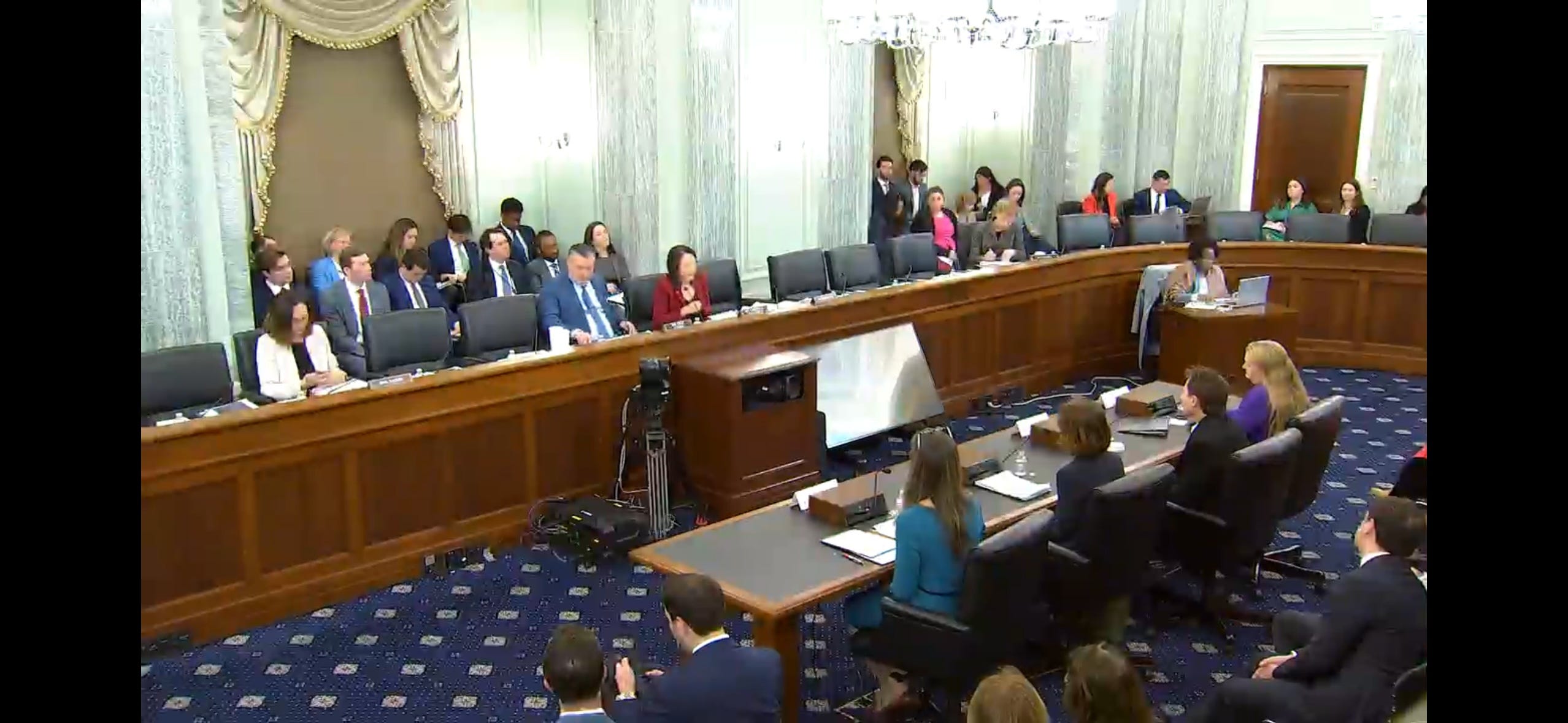
Panel of experts at the January 15, 2026 hearing before the U.S. Senate
This blog post has been shared by permission from the author.
Readers wishing to comment on the content are encouraged to do so via the link to the original post.
Find the original post here:
The views expressed by the blogger are not necessarily those of NEPC.